Learn bridge
Clear rules, explained bidding, commented hands and corrected exercises, checked card by card. In development: Bridge hors ligne, to play alone and offline against the computer, which plays the other three seats, with hints, a trick review and an analysis of every deal.
The app has not been released yet. It runs as a development build on Mac; test versions exist on iPhone, iPad and Android. No release date has been announced.

On phone, tablet and computer
The display adapts to the screen. On a phone held in landscape, the bidding and score panel collapses into an icon to leave the whole space to the table; tapping the icon opens it over the table. On tablet and computer, the table and the panel stay side by side.
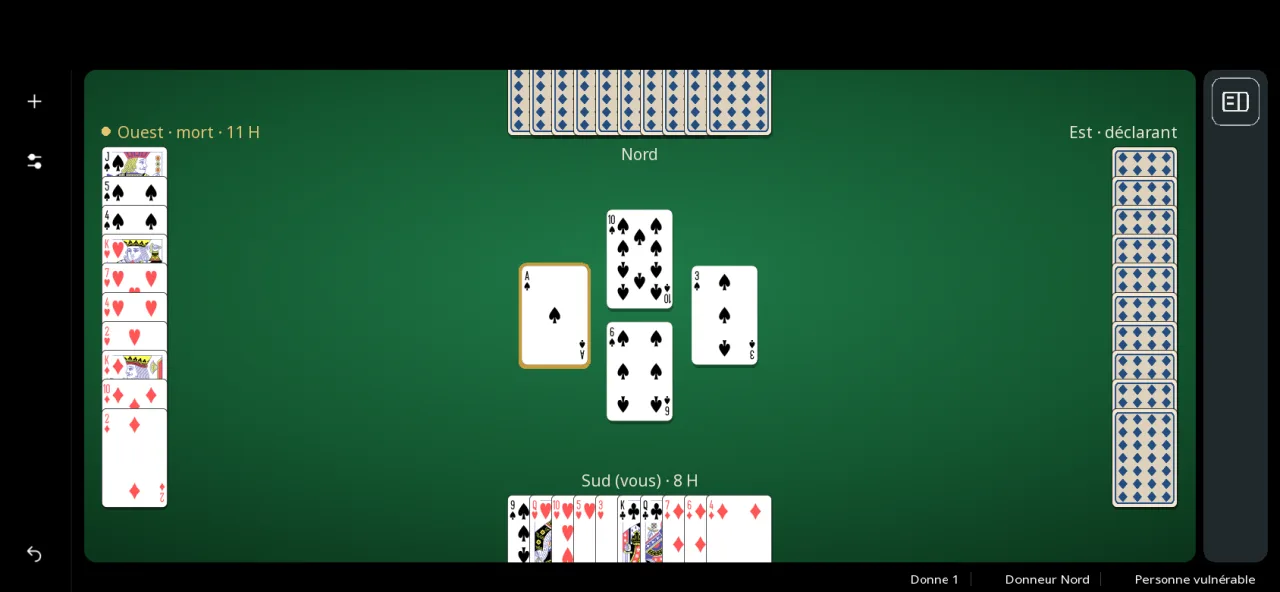
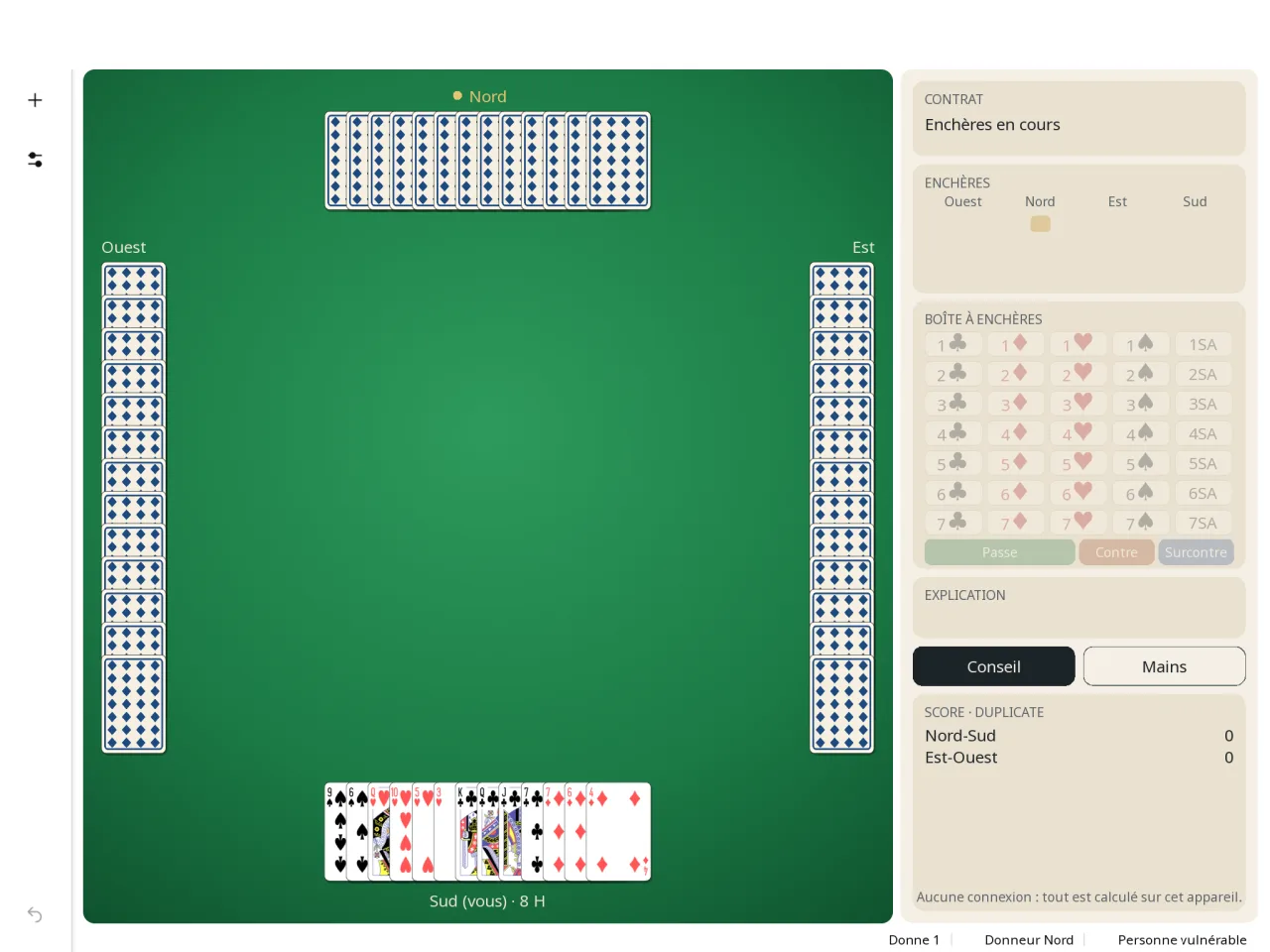

Where do you start?
The rules
The cards, the partnerships, the tricks, the bidding, the contract and scoring, without unnecessary jargon.
Learn step by step
A three-step path, from the first rules to the declarer's play plan.
The bidding
Counting your high-card points (HCP), choosing your opening bid, responding to your partner and spotting conventions.
Playing a hand
Choosing your opening lead, making a plan, making a finesse work and defending, on commented deals.
Corrected exercises
Twelve questions with their solutions, from beginner to experienced player.
Frequently asked questions
Short answers: when to bid 1NT, what to bid with 15 points, which card to lead, how to play against the computer.
Bridge in a few lines
Bridge is played by four people, in two partnerships sitting across from each other: North-South against East-West. Each player receives 13 cards.
A deal is played in two stages. First, the bidding sets the contract: the number of tricks to take, with a trump suit or at notrump. Then comes the play of the cards: the side that won the auction tries to make its contract, and the other side tries to defeat it.
To get off to a good start, count your high-card points (ace 4, king 3, queen 2, jack 1) and read the rules. Everything else builds on that.